Sciatica Treatment Charlotte: Why the Pain Keeps Coming Back


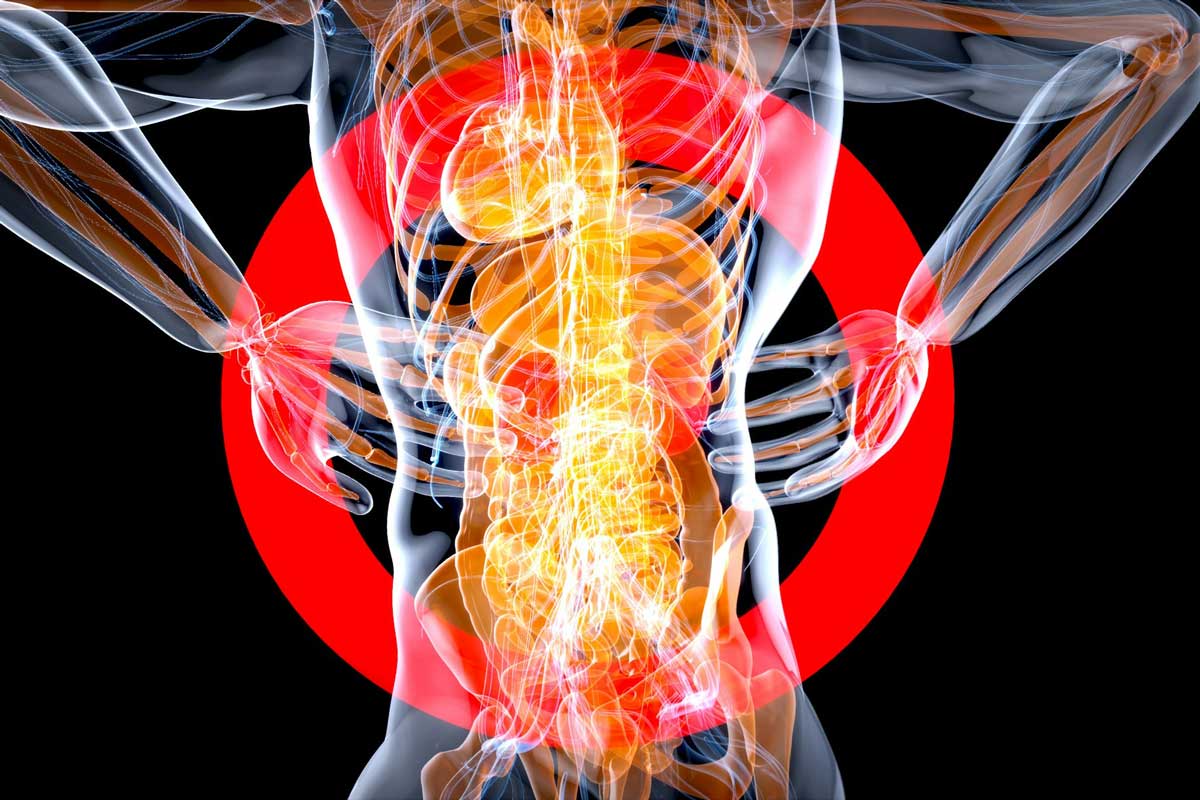
If you’re researching sciatica treatment Charlotte patients actually trust, you probably know the cycle by now.
It flares. You rest, take ibuprofen, maybe see someone. The pain calms down. You feel better for a while.
Then it comes back — sometimes worse than before. You wonder if this is just your life now.
It doesn’t have to be. But to understand why it keeps returning, you first have to understand what sciatica actually is — and what almost every common treatment gets wrong about it.

The sciatic nerve is the longest nerve in the human body. It runs from nerve roots in the lumbar spine (L4, L5, S1), through the buttock, and down the back of the leg into the foot.
When something compresses or irritates those nerve roots, you feel it: sharp pain, burning, numbness, tingling, or weakness anywhere along that path.
That’s sciatica.
Here’s the distinction most patients never hear: sciatica is a symptom, not a diagnosis. According to the National Institute of Neurological Disorders and Stroke, the actual cause is usually one of these:
In most patients, the cause is disc-related. That’s exactly why effective sciatica treatment Charlotte providers offer has to address the disc — not just the nerve pain itself.
Stretching, massage, and NSAIDs can absolutely reduce sciatic pain. They calm inflammation, relax muscle tension, and temporarily create more space around the nerve.
That’s why you feel better — sometimes for weeks or months.
But if the disc is still herniated or bulging, the pain is waiting for you. Sit too long. Lift something wrong. Sleep in a bad position. And it’s back.
Physical therapy can be extremely valuable — when it’s paired with a treatment that actually addresses the disc. Used alone, it often just strengthens muscles around a problem that hasn’t been corrected.
Epidural steroid injections are similar: powerful anti-inflammatory effect, real relief, sometimes for months. But the steroid doesn’t heal the disc. A 2024 systematic review and meta-analysis found that conservative care meaningfully outperformed surgery on leg pain and quality-of-life measures for patients with chronic sciatica lasting more than three months.
Surgery — discectomy or laminectomy — removes the material pressing on the nerve. For severe cases with neurological deficits, it’s sometimes the right call. But for most sciatica patients, surgery isn’t necessary, and it shouldn’t be considered before exhausting non-surgical options.
At Innovation Health, we treat sciatica with the DRX9000 — the most advanced FDA-cleared non-surgical spinal decompression system available.

Here’s the principle: a herniated disc bulges outward because of pressure inside the disc. The DRX9000 uses computer-controlled traction to gently elongate the spine, reducing that pressure until it actually becomes negative.
That negative pressure creates a pumping effect — pulling herniated disc material back toward its normal position, and drawing in oxygen, water, and nutrients that let the disc begin healing.
It’s not traction in the old sense. Older devices pull steadily, and the muscles guard against it, limiting the effect. The DRX9000 applies tension in a gentle logarithmic curve, cycling between distraction and relaxation in a pattern the muscles don’t fight. This is why patients often fall asleep during treatment.
Most sciatica patients complete 15–20 sessions over 6–8 weeks. Many notice significant reduction in leg pain within the first 3–5 sessions, because that’s when the nerve compression starts to lift.
We also combine decompression with chiropractic care and, when indicated, soft tissue work to address the muscle guarding that develops after months or years of pain.
If you’ve been told you need surgery for sciatica, get a second opinion — and make sure it includes a non-surgical decompression evaluation.
Surgery is not without risk:
These aren’t rare complications. They’re well-documented in spine literature.
More importantly, research consistently shows that for the most common cause of sciatica — lumbar disc herniation — outcomes at 1–2 years are comparable between surgical and conservative care in appropriately selected patients. Surgery gets you there faster in the short term; conservative care takes longer but often produces equivalent long-term results without the risks.
The question worth asking your spine surgeon: “What happens if I try spinal decompression for 6–8 weeks first?”
If the answer is “nothing — surgery will still be an option,” you have your answer.
If your sciatica has been coming and going for more than 3 months, the cycle won’t break on its own. The nerve keeps getting compressed. The disc keeps getting worse. The window for conservative care narrows over time.
Dr. Brad Wolf, DC has treated herniated discs and sciatic nerve compression in Charlotte since 1997. He’s one of the area’s most experienced DRX9000 practitioners, with over two decades of outcomes data behind his approach — which is why so many patients search for sciatica treatment Charlotte and end up at Innovation Health.
Your first visit is a comprehensive evaluation at no charge. We’ll review your imaging, assess your specific pattern of nerve compression, and tell you honestly whether you’re a candidate for decompression — and what you can realistically expect.
Call (704) 549-3005 or book your free consultation online.
You’ve treated the pain long enough. It’s time to fix the cause.

Spinal Wellness: A Guide to Preventing Spinal Surgery and Embracing a Wellness Lifestyle
Take control of your spinal health and avoid surgery with our free e-book, Spinal Wellness: A Guide to Preventing Spinal Surgery and Embracing a Wellness Lifestyle.