

Charlotte’s functional medicine approach to gut health — treating the root cause of digestive disorders, not just the symptoms.
Bloating that makes you look six months pregnant by evening. Unpredictable bowel habits that control where you go and what you eat. Chronic nausea. Stomach pain that seems to have no pattern. Reflux that antacids barely touch.
Maybe you’ve been diagnosed with IBS — the diagnosis that often means “we checked and didn’t find anything structural, so here’s a label and some fiber.” Maybe you’ve been on PPIs for years. Maybe you’ve tried elimination diets and found some relief but never figured out why.
Here’s what most gastroenterologists won’t tell you: chronic digestive dysfunction is rarely just a digestive problem.
It’s connected to your immune system (70% of which lives in your gut). Your brain (the gut-brain axis is one of the most active communication pathways in the body). Your hormones. Your energy. Your skin. Your mood. Your ability to absorb the nutrients that keep every system in your body running.
When the gut is dysfunctional, everything downstream suffers. Fixing it requires understanding why it’s dysfunctional — not just suppressing the symptoms.
Gut dysbiosis. An imbalance of beneficial and harmful bacteria in the gut microbiome is the underlying factor in a wide range of digestive conditions — IBS, SIBO (small intestinal bacterial overgrowth), chronic bloating, altered bowel habits, and more. Standard gastroenterology rarely evaluates the microbiome.
Intestinal permeability (“leaky gut”). When the lining of the intestinal wall becomes permeable, partially digested food particles and microbial fragments enter the bloodstream, triggering immune responses and systemic inflammation. This is a foundational driver of food sensitivities, autoimmune conditions, brain fog, skin issues, and joint pain — in addition to digestive symptoms.
Food sensitivities and intolerances. Distinct from allergies (which are IgE-mediated and immediate), food sensitivities (IgG-mediated) produce delayed, often subtle reactions — bloating, fatigue, brain fog, joint pain, skin changes — that most people never connect to specific foods. Identification requires specific testing, not guesswork.
Digestive enzyme insufficiency. When the pancreas, liver, or gut lining doesn’t produce adequate digestive enzymes, food isn’t properly broken down — causing fermentation, bloating, nutrient malabsorption, and altered bowel habits.
Stomach acid dysregulation. Despite what antacids suggest, many cases of chronic reflux and indigestion are caused by too little stomach acid — not too much. Low stomach acid leads to incomplete protein digestion, microbial overgrowth, and a cascade of downstream effects.
Stress and the gut-brain axis. The enteric nervous system (sometimes called the “second brain”) is directly responsive to psychological stress. Chronic stress physically alters gut motility, permeability, and microbial composition. This is why gut symptoms often worsen during stressful periods — and why addressing only the gut, without addressing the nervous system, produces incomplete results.
Nancy Hunter came to Dr. Pepper with unexplained weight gain, fatigue, and metabolic dysfunction. Her evaluation revealed her gut was “full of negative bacteria” and her digestive system wasn’t efficiently processing the food she ate — even when she was eating well. Her body had essentially been starving despite food intake.
Helen Gardiner came in with anxiety, hip pain, and digestive issues that had persisted for years. “My digestion is a work in progress, greatly improved after years of apparent abuse — I was a low-fat vegetarian for decades. The biggest benefit I received from functional medicine was blood sugar regulation. My anxiety is back under control.”
Christine Vandewalker: “I had gastro-intestinal issues my whole life. Now I’m moving more, conscious about my posture, and understanding more and more each day how what I put into my body affects so much. I never thought I could feel this good.”
Comprehensive Gut Health Evaluation: Dr. Lauren Pepper uses advanced functional lab panels to evaluate the gut microbiome, intestinal permeability markers, digestive enzyme activity, food sensitivity panels (IgG), SIBO breath testing (where indicated), comprehensive stool analysis, and inflammatory markers specific to the gut. This builds a precise picture of what’s broken and why.
Targeted Gut Restoration Protocol:The “5R” framework guides treatment: Remove (triggers, pathogens, problematic foods), Replace (digestive enzymes, stomach acid support), Reinoculate (beneficial bacteria through targeted probiotics), Repair (intestinal lining with specific nutrients and compounds), and Rebalance (lifestyle, stress response, dietary patterns).
Whole-Body Integration: Because the gut affects virtually every system in the body, Dr. Pepper’s gut protocols are never isolated. They’re built alongside attention to hormonal health, metabolic function, immune patterns, and nervous system regulation — because that’s where the connections are.
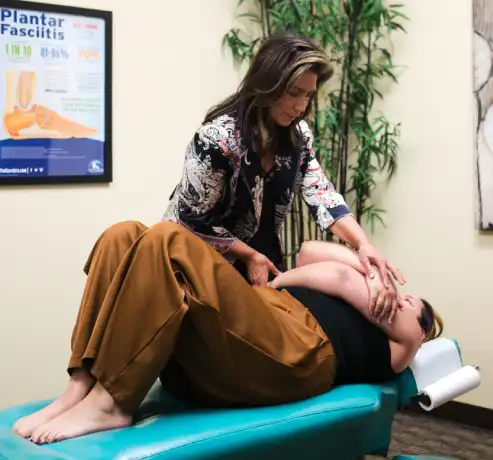
"I had daily issues... I was limited and not able to exercise or play outside with my children. Now I am pain free and not having any headaches."
"I was very nauseous and in a lot of pain throughout my whole body. I also had a lot of anxiety and felt physically ill. The benefits I have received have been less pain and a much better mood."
"Our bodies are designed to heal themselves, and through good food choices and understanding the causes of abnormalities, great health is the result."
Dr. Lauren Pepper, DC is Innovation Health’s functional medicine specialist. She has extensive experience working with patients whose chronic digestive symptoms have not responded to gastroenterological treatment — because the conventional approach rarely evaluates the microbiome, intestinal permeability, food sensitivities, or the systemic factors that drive gut dysfunction.
“It’s all about great health.” — Dr. Lauren Pepper’s guiding principle, shared with every patient.
Yes — and here's why: IBS is a symptom diagnosis, not a root-cause diagnosis. It describes what's happening (altered bowel habits with no structural cause found) without explaining why. Functional medicine evaluates the actual mechanisms — dysbiosis, permeability, food sensitivities, enzyme insufficiency — that produce IBS symptoms. Most IBS patients have never had these evaluated.
A meaningful gut restoration protocol typically runs 3–6 months. You'll often feel changes within the first 4–6 weeks as the most acute triggers are removed.
More than most people realize. Gut-driven systemic inflammation can amplify spinal pain and slow the healing of disc and joint injuries. Patients at Innovation Health who are working on both spinal health and gut health often find that addressing the gut accelerates their physical recovery.


Spinal Wellness: A Guide to Preventing Spinal Surgery and Embracing a Wellness Lifestyle
Take control of your spinal health and avoid surgery with our free e-book, Spinal Wellness: A Guide to Preventing Spinal Surgery and Embracing a Wellness Lifestyle.
— Michelle Pighet, Charlotte