What Conventional Medicine Gets Wrong About Autoimmune Disease (And What We Do Instead)



Table of Contents
ToggleIf you have an autoimmune condition, you’ve probably heard some version of this:
“Your immune system is attacking itself. We don’t know exactly why. But we can manage your symptoms with medication.”
That medication is often a drug that suppresses the immune system. In other words, it turns down immune activity across the whole body to limit the damage. For many conditions, this is a necessary and appropriate treatment, and we want to be clear about that. In fact, rheumatologists, neurologists, and gut specialists who treat autoimmune disease do important work that improves lives.
Still, managing symptoms is not the same as treating the root cause. Most autoimmune patients are never asked one key question: why is your immune system misfiring in the first place? As it turns out, that question has answers. Recent research in immunology, gut health, and environmental medicine has built a clear picture of how autoimmunity develops. As a result, that picture opens new ways to help.
The best-supported framework in autoimmune research involves three factors that occur together.
Autoimmune conditions run in families and are linked to specific HLA gene variants. However, genes are not destiny. For example, identical twins share the same genes. Yet for most autoimmune conditions, when one twin has the disease, the other develops it only 30–50% of the time. In other words, genetics loads the gun, but something else pulls the trigger.
Research from Dr. Alessio Fasano at Harvard and Mass General shows that a damaged gut lining plays a central role. When the lining breaks down, partly digested proteins and bacterial toxins slip into the bloodstream. According to Fasano’s work, this leak is a required step before autoimmunity develops in people with genetic risk. In addition, his research on zonulin, the protein that controls how tightly the gut lining seals, is among the most cited in the field.
The final hit is a trigger, such as an infection, a toxin, a food, or a long stretch of intense stress. This trigger switches on the genetic risk while the gut is leaky. Because leaky gut has already thrown the immune system off balance, the immune system overreacts, and the autoimmune process begins.
Researchers have found support for this model across many autoimmune diseases. These include Hashimoto’s thyroiditis, rheumatoid arthritis, lupus, celiac disease, type 1 diabetes, and multiple sclerosis.
Standard autoimmune treatment includes biologics, steroids, DMARDs, and other drugs that calm the immune system. These drugs target the immune response itself. That makes sense when active damage is happening. After all, you stop the bleeding before you look for the wound.
However, most autoimmune care stops there and never goes looking for the wound. As a result, no one addresses the leaky gut that allowed the immune system to activate. Likewise, the gut bacteria imbalance (dysbiosis) that keeps it going goes untreated. Meanwhile, environmental triggers such as ongoing toxin exposure, lingering infections, and reactive foods continue to drive the process.
Consequently, many patients spend years managing a condition while hidden causes keep fueling it, simply because no one has looked for them.
Dr. Lauren Pepper works alongside your specialist care. In other words, she does not ask patients to leave their rheumatologist or neurologist. Instead, functional medicine adds a layer of investigation that standard care doesn’t usually offer.
For autoimmune patients, her evaluation typically looks at five areas.
First, is the gut lining damaged? What shape is the microbiome in? And is SIBO, candida overgrowth, or another bacterial imbalance fueling the immune problem?
Second, heavy metals (mercury, lead, arsenic), mold toxins (mycotoxins), and persistent organic pollutants all have documented links to immune problems and autoimmunity. Urine organic acid tests and heavy metal panels show exposure patterns that most patients have never had checked.
Third, certain bacterial and viral infections have well-documented links to autoimmune activity. For example, researchers have linked Yersinia enterocolitica to Hashimoto’s, Epstein-Barr virus (EBV) to lupus and MS, and Proteus mirabilis to rheumatoid arthritis. Functional medicine panels check for ongoing immune reactions to these triggers.
Fourth, some nutrient deficiencies weaken immune control. Vitamin D is one of the most important because it helps regulate the immune system. Low vitamin D also shows up consistently alongside autoimmune conditions. In addition, zinc, selenium, magnesium, and omega-3 levels all play a role.
Finally, gluten has the strongest evidence for a role in autoimmunity, through the zonulin pathway described above. However, other foods such as dairy, eggs, corn, and soy can also keep gut inflammation and immune reactions going in people with genetic risk. For this reason, we use IgG food sensitivity testing to help identify which foods you react to.
We want to be upfront: functional medicine for autoimmune disease is not a quick fix, and we don’t promise remission. Autoimmune conditions are complex, and the underlying genes don’t change.
Even so, we can often lower the inflammatory load your immune system carries, and many patients experience exactly that. When we heal the gut lining, restore healthy gut bacteria, remove reactive foods, and correct nutrient gaps, the immune system often calms down. As a result, flares tend to come less often. In some cases, patients also need less medication, though any change happens only in coordination with their prescribing specialist.
Patients often say they feel “more stable.” In other words, the floor of their baseline health rises, even if a full cure is still out of reach.
If you have an autoimmune condition and want to understand what’s driving it, call (704) 549-3005 or book a free consultation with Dr. Pepper.
Managing a condition for life is not the same as understanding it. You deserve both.
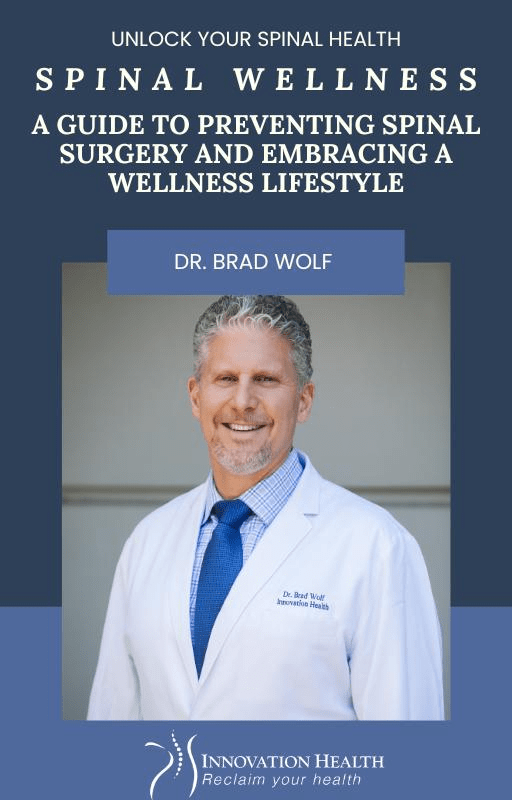
Spinal Wellness: A Guide to Preventing Spinal Surgery and Embracing a Wellness Lifestyle
Take control of your spinal health and avoid surgery with our free e-book, Spinal Wellness: A Guide to Preventing Spinal Surgery and Embracing a Wellness Lifestyle.